Fix the following errors:
More Information
Learn, explore and unleash your inner chef.
For more information, please contact:
Sarin Kouyoumdjian-Gurunlian
press@marcusevanscy.com
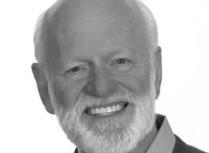
Demands on leaders are increasing. They are facing a tricky situation where they have less time to focus on change yet improving their leadership skills is more important than ever, according to Marshall Goldsmith, World’s #1 Executive Coach & Management Thought Leader.
Goldsmith is a keynote speaker at the marcus evans HR Summit 2017, taking place in the Gold Coast, Queensland, 27 - 29 March.
You have a wealth of experience coaching some of the world’s top leaders. What would you pinpoint as the biggest roadblock or blind spot holding leaders back?
Winning too much is the #1 challenge for most people, because it underlies nearly every other behavioural problem. If we argue too much, it is because we want our view to prevail (in other words we want to win). If we put other people down, it is our way to position them beneath us (again, winning). If we withhold information, it is to gain an edge over others. If we play favourites, it is to gain allies so “our side” has an advantage.
Our obsession with winning crosses the spectrum of our lives. It is not just an issue in our professional lives, it works its way into our personal lives as well. It is incredibly difficult for smart, successful people not to constantly win. We can become more successful if we appreciate this “flaw” and work to suppress it in all of our interpersonal relations.
When approaching top management, how do you help CEOs see their blind spots, especially when it comes to people strategies?
Developing as a leader is a difficult endeavour. Demands on leaders are increasing, meaning there is less time for focusing on change. And, the catch is that as more is expected of you as a leader, the less time you have for development, and yet improving your leadership skills is more important than ever. It is a tricky situation. With limited time, you have to learn on the job. You have to make the most of your surroundings and ask those around you for help. You have to enlist their support as you do your best to develop yourself, your people, and your teams – even them!
I have developed a leadership development model that I use in all of my coaching and it has now reached thousands and thousands of people. This model is just eight steps: Ask, Listen, Think, Thank, Respond, Involve, Change, Follow Up. Following is a very short description of each step.
1. Ask: Ask people “How can I be a better _________ (manager, partner, team member, etc.)?
2. Listen: Listen to their answers.
3. Think: Think about their input. What does it mean?
4. Thank: Thank people for sharing this valuable feedback with you.
5. Respond: Respond positively when receiving input.
6. Involve: Involve the people around you to support your change efforts.
7. Change: Change isn’t an academic exercise. Act on what you learn.
8. Follow-up: Follow up regularly and stakeholders will notice the positive actions you are taking based their input.
What insights do you have into the psychological mechanisms of change that would be useful to HR leaders? What knowledge could they take advantage to build stronger organisations and how?
Some years ago, I coached Alan Mulally, one of the greatest leaders of our time. At the end of the engagement I told Alan that though it was a very successful engagement, I did not feel that I had really done anything. In fact, I spent less time with him than with any client I had ever coached. I asked Alan, “What should I learn from my experience with you and your team?” He responded, “As a coach, you should realise that success with your clients is not about you. It is about the people who choose to work with you.” He then continued. “In a way, I am the same. The success of my organisation is not about me. It is about all the great people who are working with me.”
After that conversation, I learned not to hold myself up as an “expert coach”. I think of myself as “coach as facilitator”. Most of what my clients learn about themselves comes not from me but from their friends, their colleagues, and their family members. I just try to provide help when needed and assist them in not wandering too far off the course that they have chosen.
This a life-changing insight: I cannot make the successful people I work with change. I do not try. Too many people think that a coach -- especially an accomplished one -- will solve their problems. That is like thinking that you will get in shape by hiring the world’s best trainer and not by working out yourself. Long-term success is created by the people doing the work -- not just the one person who has the privilege of being at the top.
Ahead of the marcus evans HR Summit 2017, read here an interview with Marshall Goldsmith discussing what holds leaders back and his 8-step leadership development model
Marshall Goldsmith
World’s #1 Executive Coach & Management Thought Leader
5 Minutes with the World’s #1
Management Thought Leader Marshall Goldsmith
Recent Delegates
- Talent & Development, Head, Apple
- GM HR, Australian Paper
- HR Director, Ferrero Australia
- Head of HR, Mitsubishi Motors Australia
- Executive Director, People & Organisational Development, Public Transport Authority of WA
- VP HR, Unilever Australasia
- GM HR, Vodafone
- Head of HR, Westpac
and more…
About the HR Summit 2017
The 13th annual HR Summit is the premium forum bringing elite buyers and sellers together. The Summit offers chief HR executives and service and solution providers an intimate environment for a focused discussion of the key new drivers shaping corporate priorities and HR strategies. Taking place at the RACV Royal Pines Resort, Gold Coast, Queensland, 27 - 29 March, the Summit includes presentations on a range of topics, among which helping the organisation sharpen its customer focus, developing outstanding leaders, redesigning structures for higher efficiency, and creating an innovative culture.
Copyright © 2017 Marcus Evans. All rights reserved.
Summit Speakers
- Bob Hogarth, GM People & Culture, Heritage Bank
- Muneesh Wadhwa, Founder, Humanity in Business
- Marshall Goldsmith, Management Thought Leader
- Tricia Velthuizen, CEO, Churchill Education
- Lyn Goodear, CEO, Australian HR Institute (AHRI)
- McGregor Dixon, Oceania Talent Leader, Ernst & Young
- Kellie Egan, Director HR Australia & APAC, Atlassian
and more...
27 - 29 March 2017
RACV Royal Pines Resort, Gold Coast, Queensland, Australia
